Sublimation blockout fabrics for modular systems
Modular systems used in exhibition stands, such as beMatrix and Aluvision, allow exhibitors to quickly build clean, modern and visually appealing display spaces. One of the key elements of these systems are printed fabrics which, once tensioned inside the frame, create smooth and elegant wall surfaces.
We produce blockout fabrics printed using sublimation technology, precisely sewn and tailored for modular systems commonly used in the exhibition industry. Thanks to the right printing technology combined with precise sewing, the final graphic looks clean, is easy to install and convenient to transport.
Why sublimation works best
Sublimation printing on blockout fabrics preserves the natural stretch of the material. This is very important for modular systems because the graphic must be evenly tensioned inside the frame. The elastic fabric adapts easily to the structure and allows a perfectly smooth surface without wrinkles.
With UV printing the situation is different. UV ink significantly stiffens the fabric, which makes the graphic harder to tension and more difficult to install in the system frame.
Logistics is another important factor. Sublimation printed fabrics can be transported folded, which is a major advantage when transporting exhibition stands. Graphics can be folded and packed together with the structure in transport crates.
UV printed fabrics must be transported only on rolls, because folding them could cause permanent creases or damage the print. For large exhibition stands this often means more complicated transport logistics.
Width limitations and our solution
UV technology allows fabrics wider than 3 meters to be printed in one single piece. In practice, however, this also means dealing with the stiffness of the material and the need to transport the graphics on rolls.
With sublimation printing the standard fabric width is smaller, which is why we developed a well-refined method of sewing fabrics from two sections together. This allows us to maintain all the advantages of sublimation – material elasticity, easy installation and the ability to transport the graphics folded.
The sewing itself is kept as minimal as possible. We carefully match the thread color to the colors of the graphic, and together with the client we determine the best possible location for the seam.
How we make the seam practically invisible
With proper graphic preparation, the seam can become almost unnoticeable. Very often, already at the file preparation stage, we work with the client to determine the best position for the fabric connection.
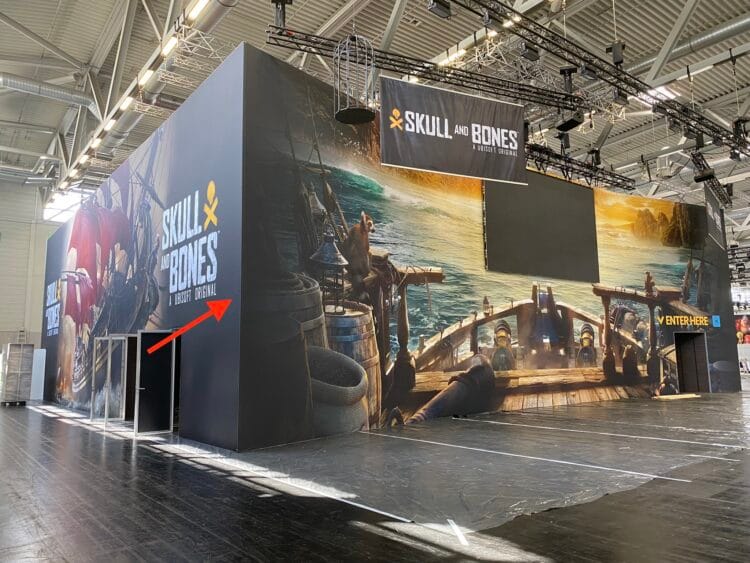
A uniform print can sometimes highlight the seam location, as in the example below.
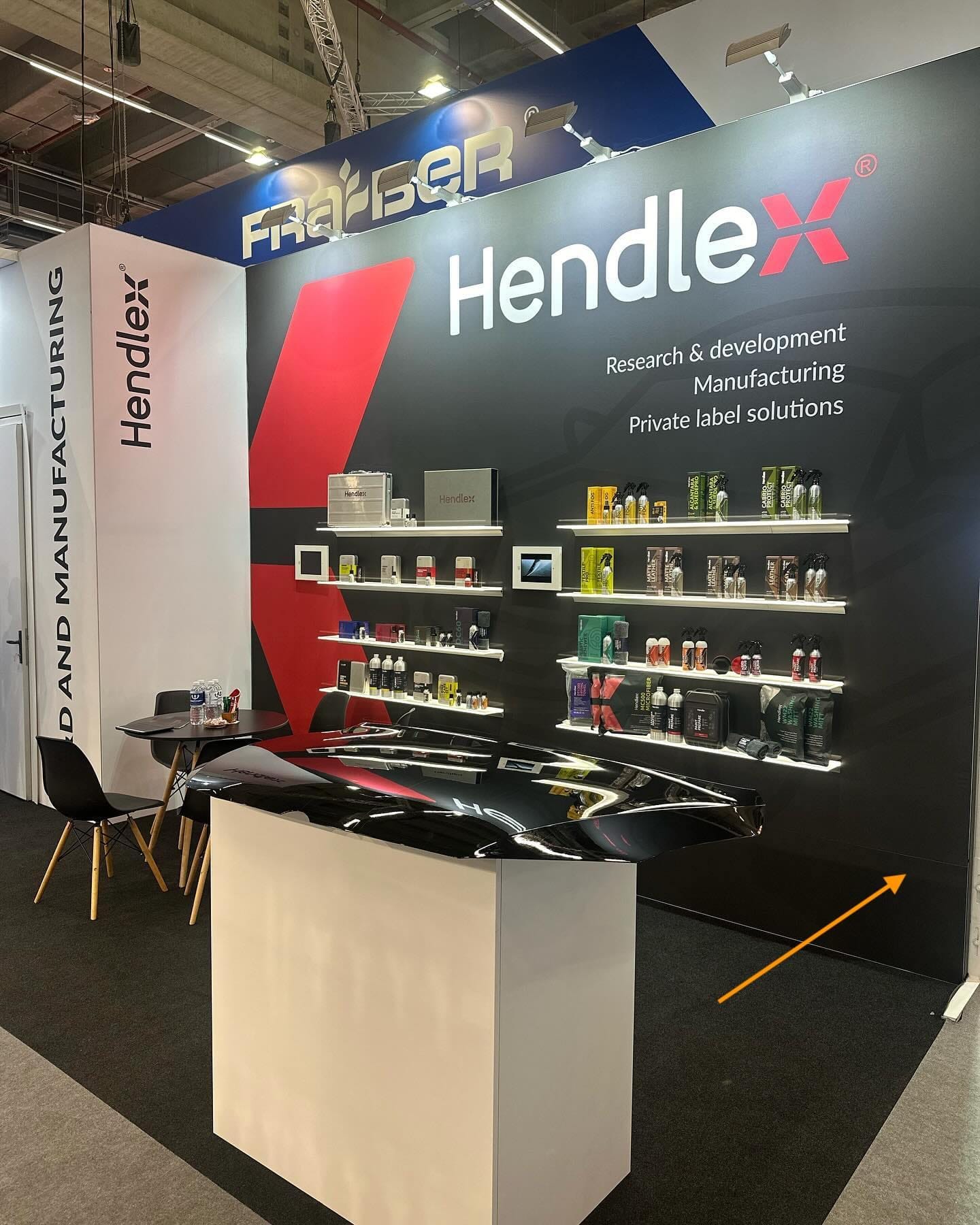
However, the graphic can be designed so that the seam runs through a darker element, a tonal transition, or a less uniform area of the design. In such cases the seam naturally blends into the graphic and does not affect the overall visual perception of the wall.
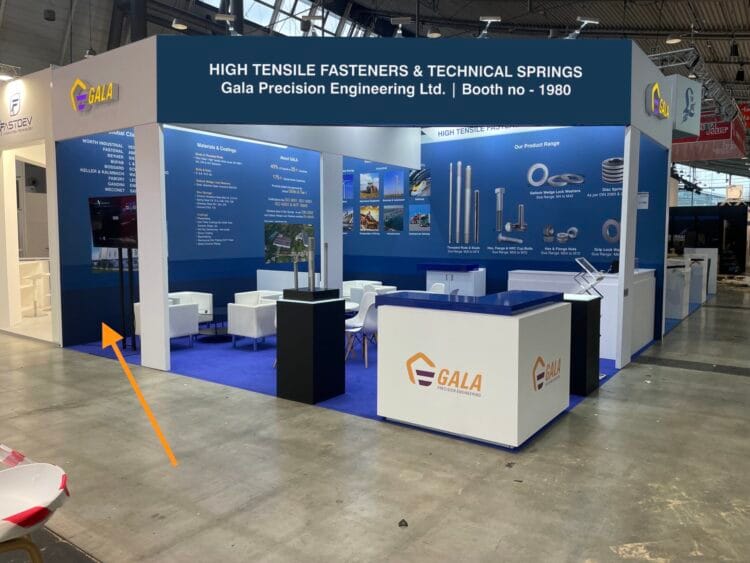
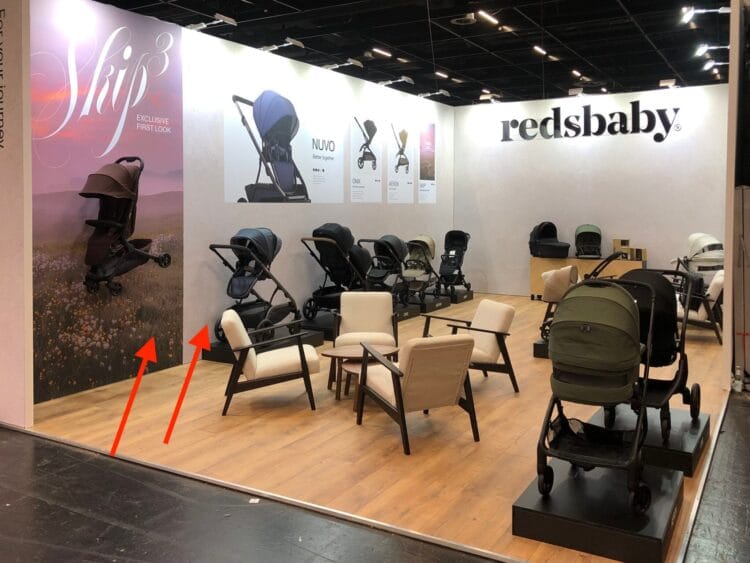
In practice it is also very common that the seam is placed in a part of the stand that is partially covered anyway, for example by chairs, tables or other stand furniture. Non-uniform graphics such as photos, textures or gradients are also excellent solutions for minimizing seam visibility.
A solution proven on many exhibition stands
The majority of our clients choose fabrics produced using this sewing method. After the exhibition stand is installed, it becomes clear that the seam does not negatively affect the visual appearance of the display, while the advantages related to fabric flexibility and transport convenience are significant.
With a well-designed graphic it is possible to achieve a result where the seam is practically invisible to visitors at the exhibition stand.
Photos showing real examples and different seam placement solutions will be added to this article. They will clearly demonstrate how the final result looks on a finished exhibition stand.
